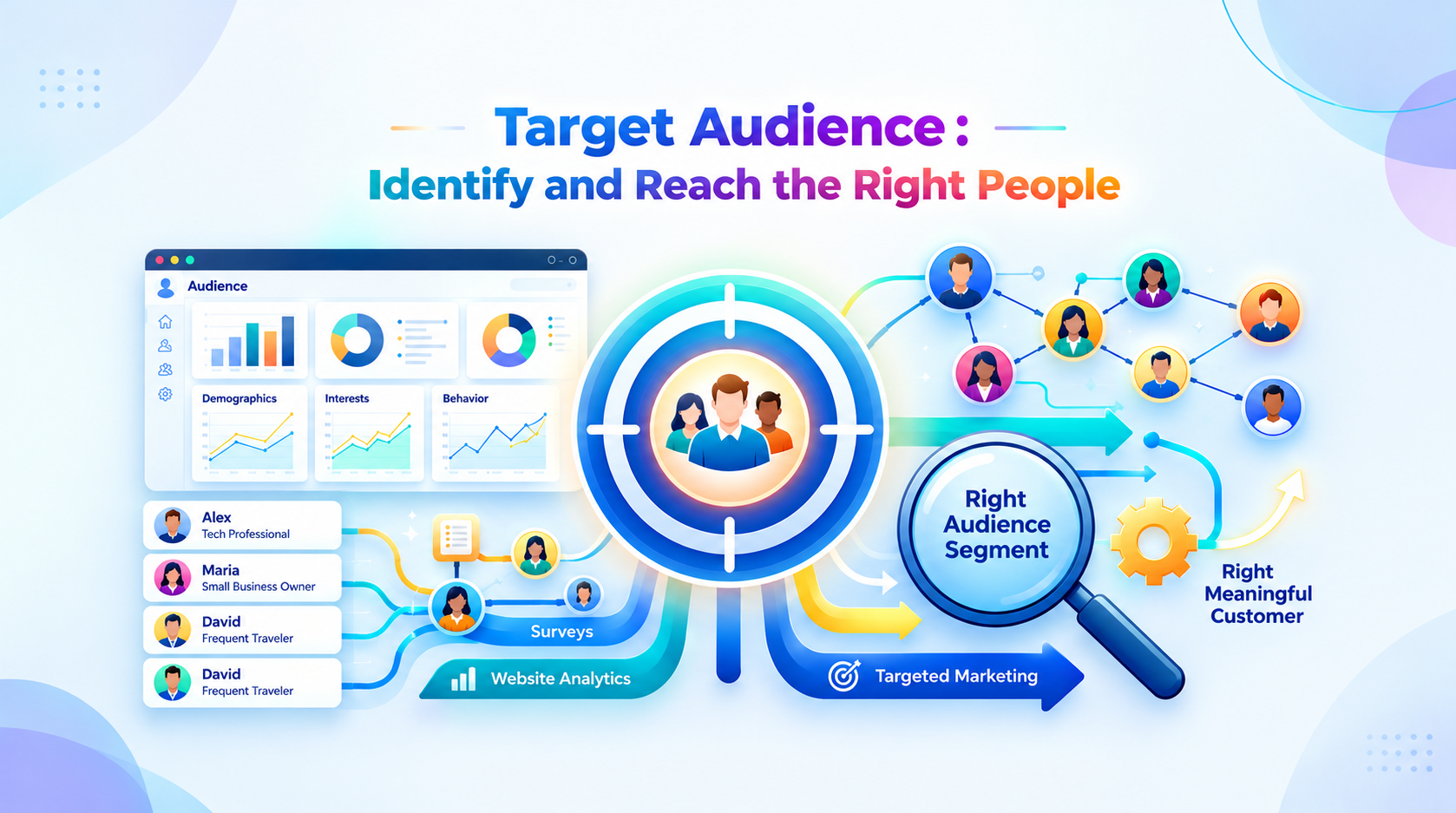
A target audience is a specific group of people most likely to be interested in a business’s products or services. These people share common characteristics, such as needs, interests, location, age, challenges, or buying behavior. Businesses use target audience research, customer surveys, website analytics, and market analysis to identify this group. These insights help businesses create relevant marketing messages, choose effective marketing channels, and attract potential customers who are more likely to convert.
Connect With Our Experts
Request a CallbackEvery business wants to attract more customers. However, reaching more people does not always lead to more sales. The real goal is to connect with people who need your product or service and are ready to consider your offer.
Understanding your target audience helps you make better marketing decisions. You can create relevant content, choose the right marketing channels, improve ad performance, and use your budget more wisely. As a result, your business can attract more qualified leads and build stronger customer relationships.
In this guide, you will learn 10 practical ways to identify your target audience, understand customer needs, and reach the right people through SEO, social media, email marketing, and paid advertising.
Table of Contents
- Why Is Identifying Your Target Audience Important?
- 10 Effective Ways to Find and Reach Your Target Audience
- Analyze Your Existing Customers
- Conduct Target Audience Research
- Build a Clear Buyer Persona
- Segment Your Audience Into Smaller Groups
- Research Your Competitors’ Audiences
- Use Website Analytics to Understand Visitor Behaviour
- Create Content That Matches Customer Search Intent
- Choose the Right Social Media and Marketing Channels
- Use Targeted Ads and Retargeting to Reach Potential Customers
- Track Results and Refine Your Target Audience
- A Practical Framework to Diagnose Target Audience Problems
- Common Mistakes to Avoid When Defining a Target Audience
- Frequently Asked Questions About Target Audiences
- Reach Your Ideal Customers With a Clear Strategy
Why Is Identifying Your Target Audience Important?
Identifying your target audience helps you understand who you want to reach and why those people might choose your business. Without this knowledge, marketing messages can become too broad and fail to connect with potential customers.
For example, a company selling accounting software may serve small business owners, freelancers, and large enterprises. However, each group has different needs. Freelancers may want simple invoicing, while larger companies may need advanced reporting and team access.
By understanding these differences, the company can create more relevant campaigns for each group.
A clearly defined target audience can help your business:
- Create content that answers customer questions.
- Improve audience targeting in paid advertising.
- Generate more qualified leads.
- Reduce wasted marketing spend.
- Improve conversion rates and customer engagement.
- Build stronger relationships with customers.
Therefore, audience research should be part of your marketing strategy from the beginning. For additional guidance, read Ecsion’s article on how to determine your target market.
10 Effective Ways to Find and Reach Your Target Audience
1. Analyze Your Existing Customers
Your current customers can provide valuable clues about your ideal target audience. Start by reviewing who buys from you, which products they choose, and what problems your products or services solve.
Look for patterns in customer location, industry, interests, purchase frequency, and order value. Furthermore, review customer feedback and common questions to understand what motivates people to buy.
For example, a web design company may find that most of its qualified leads come from small businesses that need website redesigns rather than brand-new websites. This insight can help the company tailor its content and campaigns to that audience.
Start with your existing customer data instead of making assumptions about who might buy from you. You can also learn how website design supports customer acquisition in Ecsion’s guide to whether your business needs a website.
2. Conduct Target Audience Research
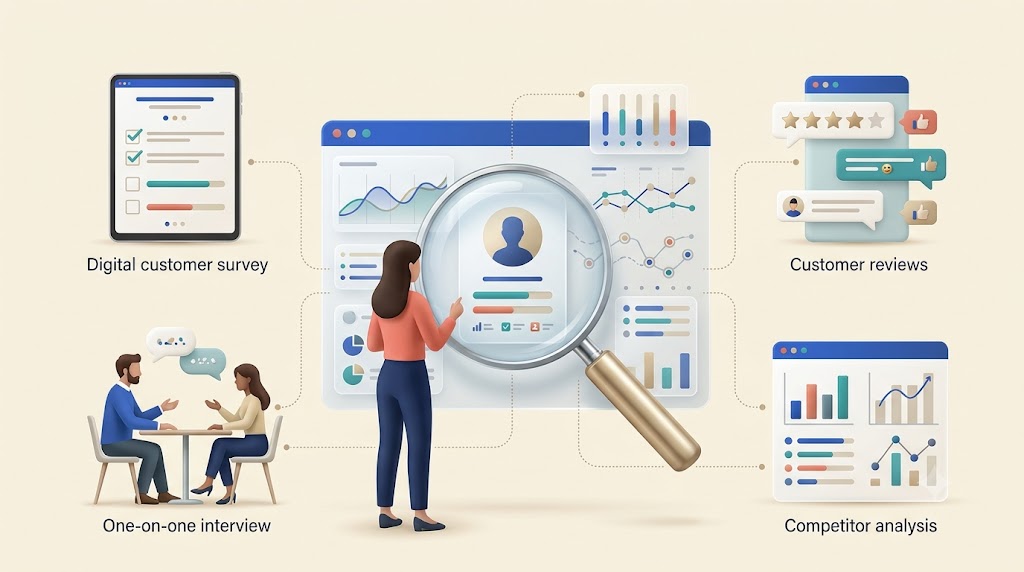
Target audience research helps you understand potential customers before you spend money trying to reach them.
Use a mix of surveys, interviews, customer reviews, online discussions, and competitor analysis. Ask questions about customers’ goals, challenges, buying habits, and preferred ways to find information.
For instance, you could ask:
- What problem are you trying to solve?
- What makes choosing a product or service difficult?
- Which features matter most to you?
- Where do you usually look for recommendations?
- What would encourage you to make a purchase?
Next, compare the answers to identify common needs. This information can guide your messaging, content topics, and product positioning.
For a more structured approach, explore Ecsion’s guide on six steps to determining your target market. It explains how businesses can research customers, identify market opportunities, and develop more focused marketing strategies.
3. Build a Clear Buyer Persona
A buyer persona is a practical profile of a typical customer. It helps you turn research into a clearer picture of the people you want to reach.
Your target audience may contain several customer groups. A buyer persona describes one of those groups in greater detail.
Include the following details in each persona:
- Background: Job role, industry, or life stage.
- Goals: What the person wants to achieve.
- Challenges: Problems that may prevent progress.
- Buying behavior: How the person compares options and makes decisions.
- Preferred channels: Where the person searches for information.
- Decision factors: Price, quality, trust, convenience, or support.
Example: A buyer persona for a web development company could be a small business owner who needs a professional website, wants to generate more enquiries, and has limited technical knowledge.
This profile helps the company create useful content, explain its services clearly, and answer the questions that matter to potential customers.
Validate each buyer persona against customer interviews, sales conversations, conversion data, and website behavior. Update it when the customer needs it, objections arise, or purchasing patterns change.
When creating your persona, focus on real customer data rather than assumptions. Your research should explain what potential customers need, what influences their decisions, and which solutions they are most likely to consider.
4. Segment Your Audience Into Smaller Groups
Not every customer has the same needs. Audience segmentation divides a broad target audience into smaller groups with shared characteristics.
You can segment your audience in several ways:
| Segmentation type | What it considers | Example |
| Demographic | Age, income, occupation, or education | Working professionals |
| Geographic | Country, city, region, or local area | Businesses in Nagpur |
| Psychographic | Interests, values, goals, and lifestyle | Customers who value sustainability |
| Behavioural | Purchases, website activity, and product usage | Visitors who viewed a service page |
| Firmographic | Business size, industry, and company type | Small eCommerce companies |
Choose the segments that relate to your business goals. For example, a local service provider may benefit more from geographic targeting than from broad interest-based targeting.
Once you understand each segment, tailor your content and offers to its specific needs. This approach makes your marketing more relevant without treating every potential customer the same way.
For example, a web development company could create separate campaigns for small businesses that need a new website and larger organizations that require custom software. Each campaign would address the needs and buying priorities of its intended audience.
5. Research Your Competitors’ Audiences
Competitor research can reveal which customer groups are already interested in products or services like yours.
Review competing websites, blog topics, social media discussions, customer reviews, and frequently asked questions. Look for common complaints, unanswered questions, and customer needs that competitors may overlook.
For example, several competitors may promote the advanced features of their software. However, customer reviews might reveal that beginners struggle with setup and training.
Your business could respond by publishing beginner-friendly guides, offering clearer onboarding information, or explaining the setup process on its website.
However, do not assume that every competitor’s audience is right for your business. Use competitor research to identify opportunities, then validate those findings with your own customer data.
You should also examine how competitors position their services and communicate their value. Identify the questions they answer well and the gaps your content can address. This will help you create a distinct message that attracts customers who are a good fit for your business.
6. Use Website Analytics to Understand Visitor Behavior
Website analytics can show how people discover your business and interact with your content.
Review your analytics reports to understand which channels bring visitors, which pages attract attention, and which actions lead to enquiries or sales. Search performance data can also reveal the queries people use to discover your website.
Pay attention to:
- Organic search queries and landing pages.
- Traffic from social media and referral sources.
- Pages that generate leads or purchases.
- Engagement patterns across key pages.
- Conversion rates by traffic source.
For example, an agency may discover that its SEO guides attract many visitors, but its service pages generate more qualified enquiries. This insight suggests that educational content can introduce the brand to new audiences, while service pages help interested visitors take the next step.
If your website attracts visitors but struggles to generate enquiries, review your page content, search visibility, and user journey. Ecsion’s guide on why a website may not be ranking on Google explains how keyword targeting, search intent, technical issues, and other website problems can affect organic visibility.
Measure meaningful actions, such as form submissions, purchases, and qualified enquiries, rather than relying on traffic alone. These metrics help you understand whether your website attracts the right audience and supports your business goals.
7. Create Content That Matches Customer Search Intent
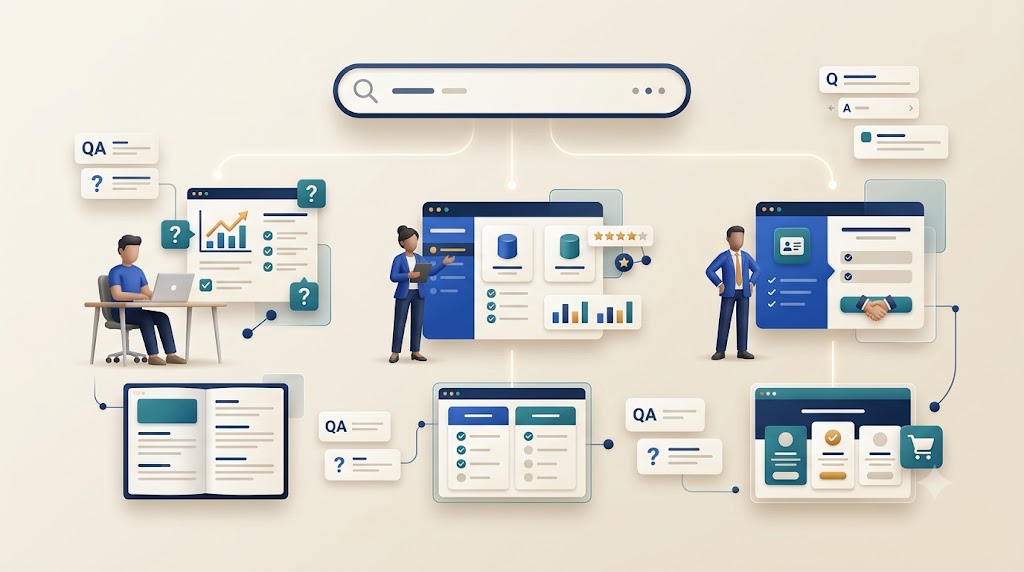
Search intent is the reason behind a person’s search query. Some people want information, while others are comparing solutions or preparing to buy.
Your content should match what the target audience needs at each stage of the buying journey.
For example:
- Informational intent: “How to improve website traffic”
- Commercial investigation: “Best SEO services for small businesses”
- Transactional intent: “Hire an SEO agency”
Create blog posts, service pages, comparison guides, case studies, and FAQs that answer these questions.
Furthermore, provide direct answers near the beginning of each important section. Use clear headings, short paragraphs, and practical examples to make the information easier to understand.
Avoid creating content solely to include keywords. Instead, identify the questions your target audience asks and provide helpful, relevant answers.
For more guidance, read Ecsion’s article on choosing an SEO agency for better AEO visibility. It explains why content quality, search intent, and customer needs matter when improving search visibility.
8. Choose the Right Social Media and Marketing Channels
Your target audience may use several platforms, but your business does not need to be active everywhere.
Choose marketing channels based on where your potential customers spend time and how they prefer to find information.
For example, LinkedIn may be useful for reaching business decision-makers, while Instagram may suit visually driven products and services. Search engines can help you reach people actively looking for solutions. Email marketing can nurture prospects who have already shown interest.
Use these questions to select your channels:
- Where does your audience look for advice?
- Which platforms do customers use regularly?
- Does your audience prefer videos, articles, emails, or short posts?
- Which channels bring qualified leads?
- Can your team maintain consistent, useful content?
Start with the channels that offer the strongest fit. Then measure performance and expand only when there is a clear reason to do so.
Your website should support these channels by giving visitors useful information and a clear next step. Depending on your goals, that next step could be submitting an enquiry, requesting a quote, booking a consultation, or exploring a product.
9. Use Targeted Ads and Retargeting to Reach Potential Customers
Paid advertising can help your business reach a defined target audience based on available targeting options, customer signals, and campaign goals.
Platforms such as Google Ads and Meta Ads offer different ways to reach people. Depending on the platform and campaign type, you may be able to use location, interests, search intent, customer lists, or engagement signals.
For example, a company selling project management software could run search ads for relevant software queries. It could also use suitable remarketing audiences to reconnect with people who visited its website but did not submit an enquiry.
Retargeting is useful because some visitors need more time before making a decision. However, it should complement a broader strategy rather than replace efforts to attract new customers.
Before launching a campaign, define the audience, offer, landing page, and desired action. Then test different messages and audience groups to learn which combinations perform best.
Your landing page should match the message in your advertisement. For example, an ad promoting website development should direct visitors to a relevant service page rather than a general page that does not address their needs.
To improve campaign performance, explore Ecsion’s guide to Google Ads optimization. It covers campaign improvements, conversion measurement, and ways to focus advertising on meaningful business outcomes.
10. Track Results and Refine Your Target Audience
Audience research is not a one-time task. Customer needs change, new competitors enter the market, and campaign performance can shift over time.
Track the metrics that show whether you are reaching the right people. Depending on your goals, these may include qualified leads, conversion rate, cost per lead, customer acquisition cost, repeat purchases, and return on ad spend (ROAS).
ROAS measures the revenue attributed to advertising relative to the advertising spend. For example, if an advertising campaign generates ₹50,000 in attributed revenue from ₹10,000 in ad spend, its ROAS is 5:1. This figure does not account for all business costs or prove profitability by itself.
Use conversion tracking to measure important actions such as form submissions, purchases, and qualified enquiries. Make sure your tracking setup reflects the outcomes that matter to your business.
Review the results regularly. If a campaign attracts many visitors but few qualified leads, examine the audience, message, offer, and landing page before increasing the budget.
For example, an eCommerce business may discover that one audience segment generates more purchases, while another produces many clicks but few sales. The business can use these findings to adjust its targeting and budget allocation.
As a result, your business can make evidence-based decisions and improve its ability to reach the right target audience.
A Practical Framework to Diagnose Target Audience Problems
When marketing campaigns fail to deliver results, avoid changing every part of your strategy at once. Instead, identify where the problem occurs and test one improvement at a time.
| What you observe | Possible reason | What to do next |
| High traffic but few leads | Visitors may not match your ideal customer profile | Compare converting and non-converting traffic sources; revise the page to match visitor intent |
| Many clicks but few conversions | The offer or landing page may not meet visitor expectations | Exclude irrelevant searches and verify conversion tracking before changing bids |
| High cost per lead | Targeting may be too broad, or the offer may be weak | Compare the content with the questions and needs of your intended audience |
| Good engagement but few sales | Content may attract researchers rather than buyers | Review objections and make the next conversion step clear |
| Low ad reach | Audience settings, bids, budget, or competition may limit delivery | Review campaign diagnostics and available delivery data |
| Declining campaign results | Customer needs or market conditions may have changed | Refresh research, creative, and audience assumptions |
Follow a simple four-step diagnostic process
Step 1: Identify the weak point. Determine whether the issue is traffic quality, engagement, lead generation, or sales.
Step 2: Check the evidence. Use analytics, search queries, customer feedback, and advertising reports to find likely causes.
Step 3: Test one change. Refine the audience, adjust the message, improve the offer, or update the landing page.
Step 4: Measure the outcome. Compare results against the same business metric and a suitable time period. Keep changes that improve meaningful outcomes, not just clicks.
This process helps you avoid unnecessary spending and makes your audience targeting decisions easier to explain and repeat.
Common Mistakes to Avoid When Defining a Target Audience
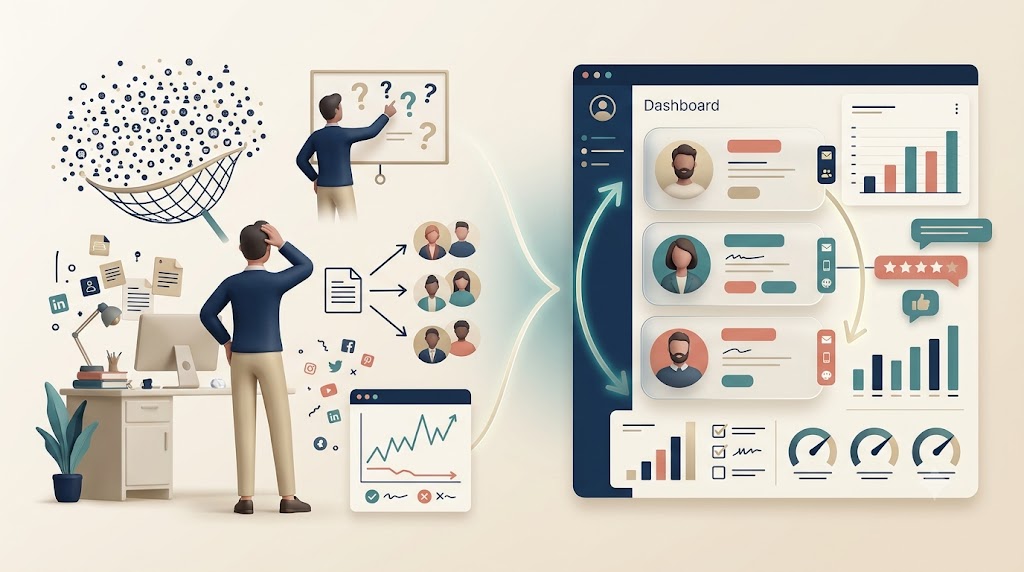
Even a well-designed marketing campaign can struggle when the target audience is poorly defined. Avoid these common mistakes:
- Targeting everyone: A broad audience may dilute your message and attract people who are unlikely to buy.
- Relying on assumptions: Use customer research and real performance data to validate your ideas.
- Ignoring existing customers: Their feedback and behavior can reveal valuable audience patterns.
- Using the same message for every segment: Different groups may have different needs, concerns, and buying priorities.
- Choosing channels without research: A popular platform is not automatically the best channel for your audience.
- Measuring only traffic or clicks: Qualified leads, sales, and customer value provide a more complete view of performance.
- Failing to update audience profiles: Review your assumptions as customer behavior and business goals change.
Ultimately, effective target audience research combines customer understanding with regular testing. The goal is not to build a perfect profile once. It is to keep improving your understanding of the people most likely to benefit from your offer.
Connect With Our Experts
Request a CallbackFrequently Asked Questions About Target Audiences
1. What is a target audience in marketing?
A target audience is a group of people most likely to be interested in a business’s products or services. Businesses define this group using factors such as needs, interests, location, demographics, and buying behavior.
2. How do you identify your target audience?
Identify your target audience by analyzing existing customers, researching market demand, studying competitors, creating buyer personas, and reviewing website and conversion data. Use these findings to validate who is most likely to become a customer.
3. What is the difference between a target audience and a target market?
A target market is the broader group of potential customers a business aims to serve. A target audience is a more specific group within that market that a particular marketing campaign, message, or offer is designed to reach.
4. How can I reach my target audience online?
Use SEO, helpful blog content, social media, email marketing, paid search, and suitable social advertising. Choose channels based on customer behavior, and measure which ones generate relevant engagement, qualified leads, and sales.
5. How often should I review my target audience?
Review your audience when customer behavior changes, you launch a new product, enter a new market, or notice a meaningful shift in campaign performance. Regular reviews help you keep your marketing relevant.
6. How do I know whether I am reaching the right target audience?
Look beyond impressions and clicks. Check whether your campaigns attract relevant visitors, qualified enquiries, conversions, repeat customers, and profitable sales. Compare results with your business goals and improve your targeting based on the evidence.
Reach Your Ideal Customers With a Clear Strategy
Identifying your target audience helps you focus your marketing on people who are most likely to need your products or services. Start by analyzing existing customers, conducting audience research, creating buyer personas, and reviewing website and campaign data. Then use those insights to select relevant channels, improve your content, and measure the quality of the leads you attract.
Your target audience may change as your business and market evolve, so review your findings regularly. A research-driven approach helps you make better marketing decisions, use resources more effectively, and build stronger connections with potential customers.