No part of this publication may be reproduced, distributed, or transmitted in any form or by any means, including photocopying, recording, or other electronic or mechanical methods, without the prior written permission of the publisher, except in the case of brief quotations embodied in critical reviews and certain other noncommercial uses permitted by copyright law.
Disclaimer: The information contained in this eBook is for general informational purposes only. The authors and publishers assume no responsibility for errors or omissions, or for any outcomes related to the use of this material. All strategies and recommendations are provided "as is" without warranty of any kind.
Introduction
The Future of Search of AI 2027
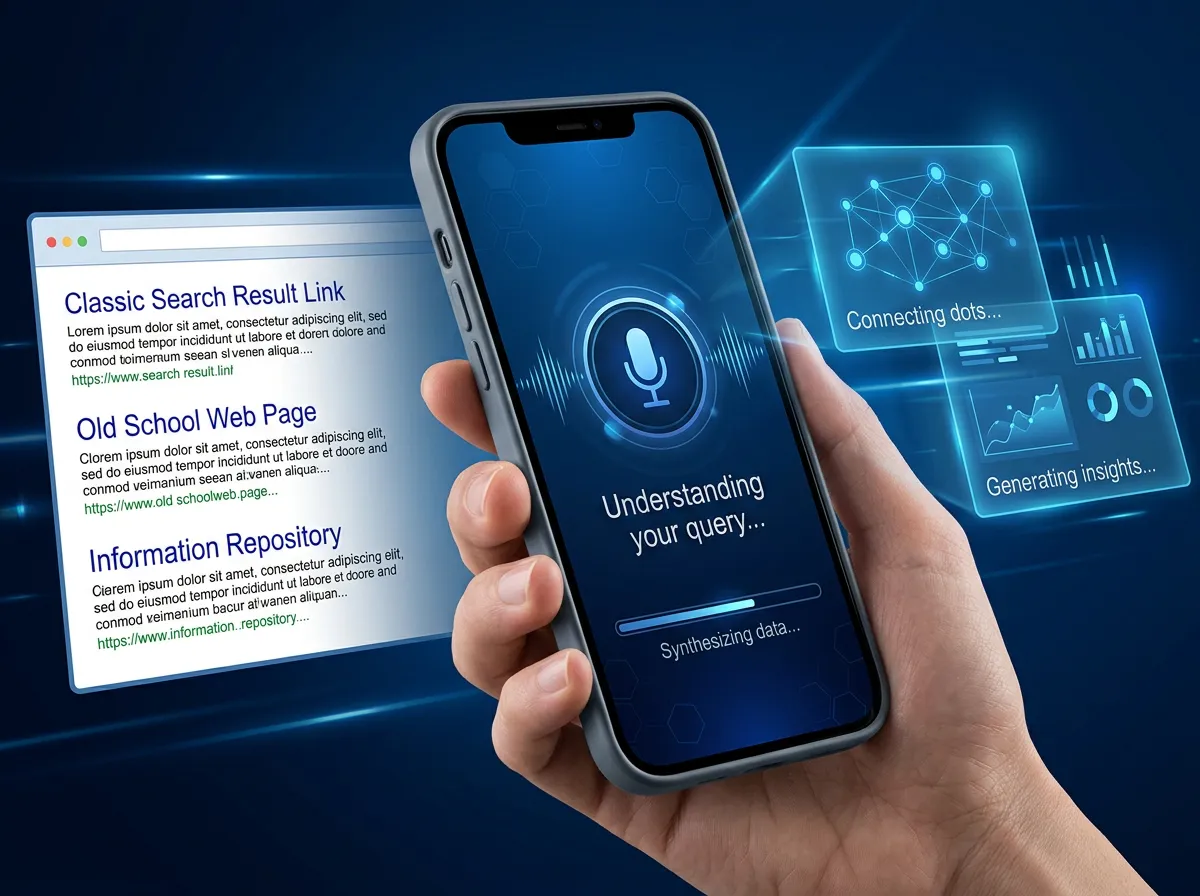
Search has fundamentally changed. AI Overviews, voice assistants, and search agents now deliver answers directly. Over 70% of searches result in zero clicks. Businesses must shift from chasing traffic to building visibility through AI citations, voice presence, and agent readiness. This guide provides actionable strategies for thriving in the transformed search landscape.
Search has fundamentally changed. Over 70% of searches now result in zero clicks.Chapter 1
The Evolution of Search
Search has evolved through three eras. Keyword Search (1990s-2010s) matched keywords to pages using PageRank. Semantic Search (2010s-2022) introduced meaning and intent through Hummingbird and BERT. AI-Powered Discovery (2023-present) uses generative AI to create comprehensive answers. Google AI Overviews, ChatGPT, and Gemini now generate synthesized responses. Search agents perform tasks for users. This shift is permanent.
Key Takeaway
Adapt to AI-powered discovery now or become invisible.
Chapter 2
AI Search Evolution
AI Search uses Natural Language Understanding, Semantic Analysis, Generative Capabilities, Contextual Awareness, and Predictive Intelligence. These systems understand context, generate answers, and anticipate needs.
AI Search platforms and their strengths
Platform
Key Strength
Best For
Google AI Overviews
Vastest data index
General queries
ChatGPT Search
Natural conversation
Complex questions
Gemini Search
Multimodal understanding
Rich discovery
Perplexity AI
Source transparency
Verifiable info
AI Search changes discovery fundamentally. Answers replace links. Over 70% of users prefer AI-generated answers. Adoption has grown 300% since 2024.
Key Takeaway
AI citation share is the new KPI. Being cited matters more than ranking.
Chapter 3
The Rise of Generative Search
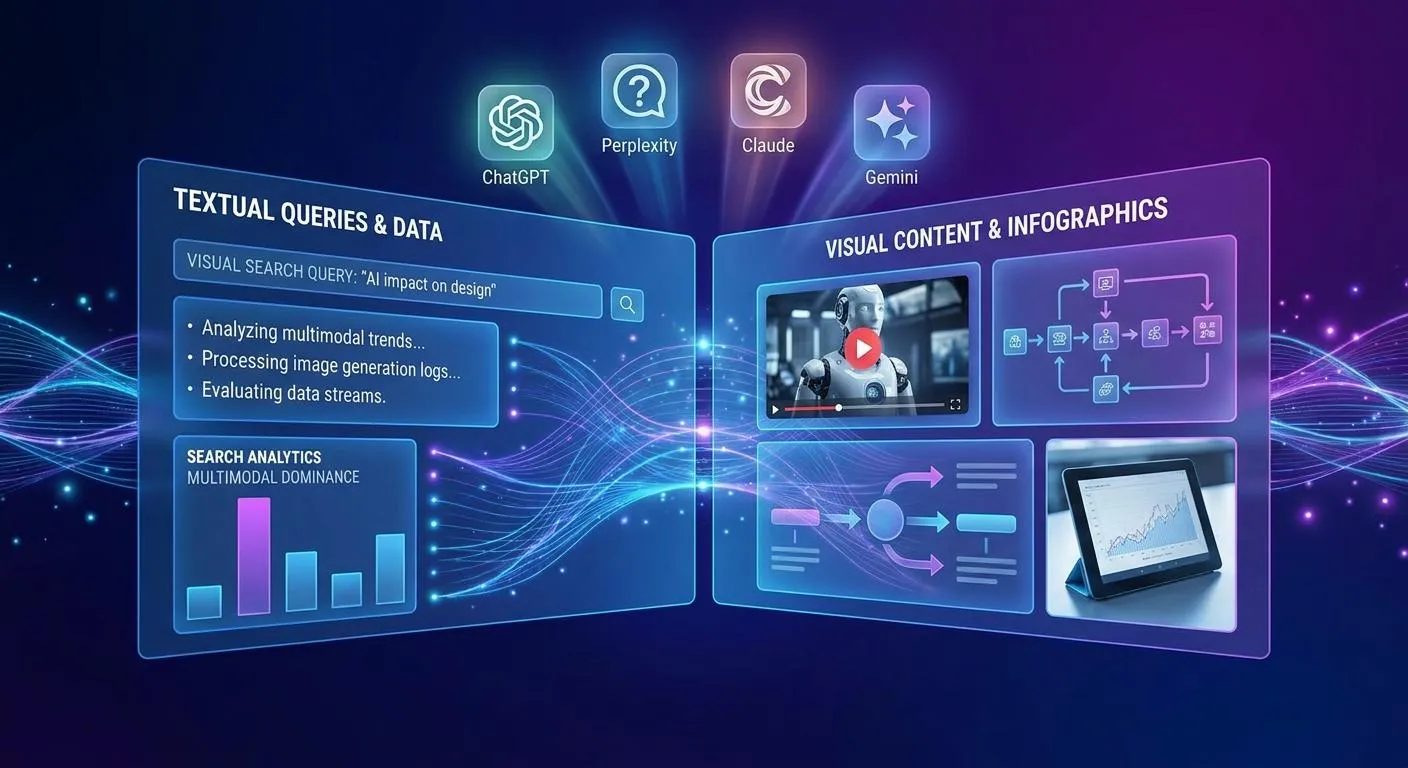
Generative Search creates comprehensive, conversational answers. Google AI Overviews combines Google's index with Gemini AI. ChatGPT Search offers conversational AI with real-time retrieval. Gemini Search provides multimodal understanding. Perplexity AI focuses on source transparency.
Generative Search transforms discovery through Information Synthesis, Conversational Experience, Personalized Responses, Source Transparency, and Continuous Learning. Marketing implications are significant. Citation Share is the new ranking equivalent. Content must be extractable. Authority building is crucial.
Key Takeaway
Being cited by generative platforms is the new ranking. Optimize content for inclusion.
Chapter 4
Zero Click Search
Zero Click Search occurs when users find answers directly in search results without clicking. Over 70% of queries now result in zero clicks. AI Overviews account for 40%. Voice search is 95% zero-click.
AI delivers comprehensive answers directly. Information density satisfies users immediately. Convenience drives preference. Mobile encourages minimal interaction.
Forms include Direct Answer Queries, Informational Queries, Voice Queries, Predictive Search, and Knowledge Panel Queries. Implications include declining traffic, rising AI visibility importance, and need for new metrics.
70%+Queries result in zero clicks
40%AI Overviews account for
95%Voice search is zero-click
Key Takeaway
Zero Click Search is permanent. Adapt to visibility-focused strategies.
Chapter 5
How Businesses Can Win in a Zero Click World
Winning requires shifting from traffic to visibility focus. The Zero Click Marketing Framework includes optimizing for AI Visibility, building Brand Awareness, diversifying Discovery Channels, creating Unclickable Value, and converting Visibility to Action.
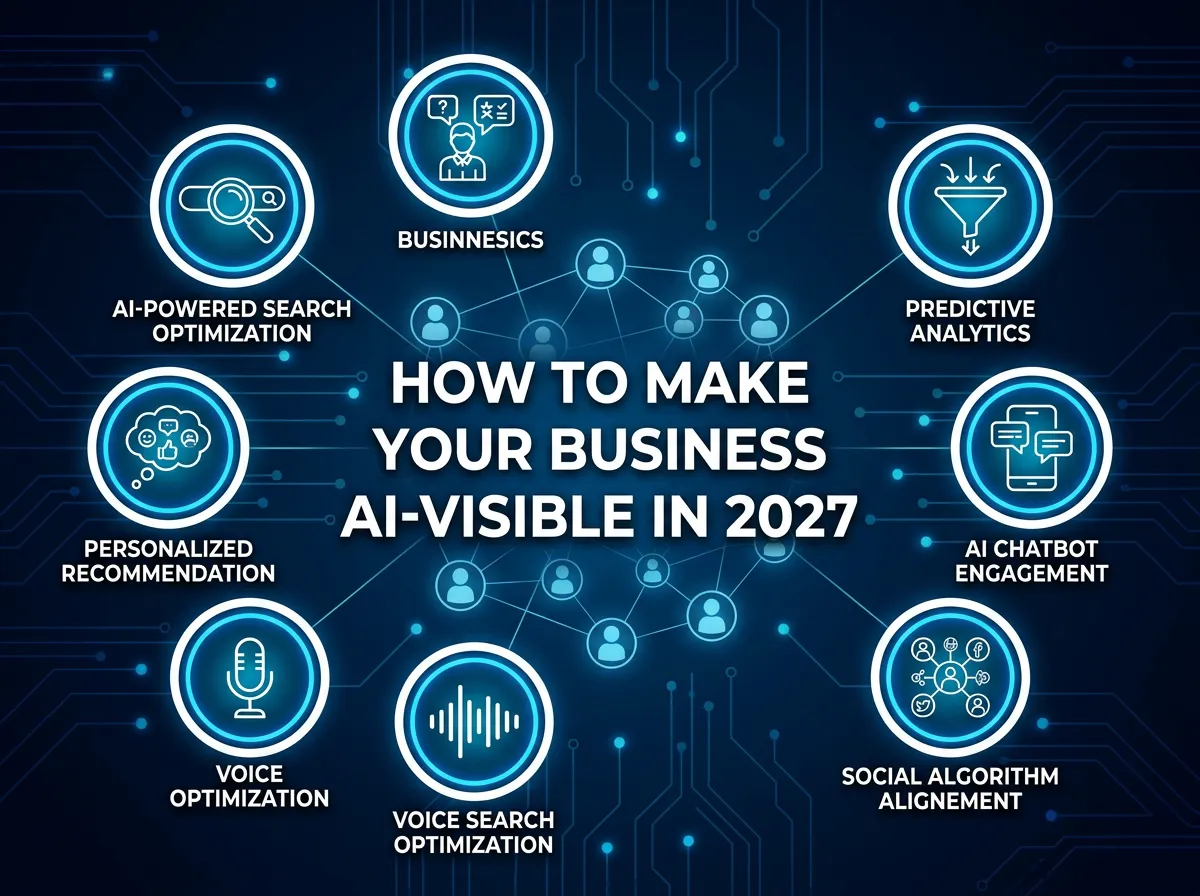
Strategies include AI Overview Optimization with clear headings and structured data. Knowledge Panel Optimization claims your panel. Voice Search Optimization is essential. Featured Snippet Optimization provides visibility. Brand Visibility ensures consistent presence.
Measure success through AI Citation Share, Voice Search Presence, Branded Search Lift, Knowledge Panel Accuracy, and Search Visibility Score.
Key Takeaway
The shift from traffic to visibility is the most important strategic change.
Chapter 6
Voice Search
Voice Search uses voice commands to search via Google Assistant, Siri, and Alexa. Over 45% of interactions are voice-based. Voice commerce exceeds $200 billion. Usage grows 20% annually.
Factors driving growth include convenience, improved accuracy, speed, accessibility, and multitasking. User behavior differs significantly. Users speak natural language with full sentences. Queries average 10+ words. Voice search is location sensitive and almost always zero-click.
Platforms include Google Assistant (dominant), Amazon Alexa (voice commerce), Apple Siri (iOS), and Microsoft Cortana.
Key Takeaway
Voice search is essential. Businesses ignoring voice search miss significant opportunities.
Chapter 7
Voice Search Optimization Framework
Five components create voice search visibility. Natural Language Content requires conversational writing with complete sentences. Question-Answer Format addresses question-driven queries using FAQ format and schema. Local Optimization claims Google My Business and ensures consistent NAP information. Technical Implementation uses SpeakableSpecification and FAQ schema with mobile optimization. Conversational Experience creates dialogue-like content supporting follow-up questions.
Implement all five components for visibility. Partial implementation produces partial results. Voice search grows rapidly. Optimize now for competitive advantage.
Key Takeaway
Complete implementation of all five components earns voice search visibility.
Chapter 8
Search Agents
Search Agents are autonomous AI systems performing tasks for users. They discover information, make decisions, and take actions independently. Users delegate goals rather than queries. Agents learn from interactions.
Types include Shopping Agents, Research Agents, Planning Agents, Personal Assistants, and Professional Agents. Applications span E-Commerce, Travel, Finance, Healthcare, and Research.
By 2028, 30% of commercial queries will use agents. Shopping agents will handle $500 billion in transactions. Over 60% of users express interest. Adoption grows 50% annually.
Key Takeaway
Search Agents represent the next frontier. Prepare now to lead.
Chapter 9
How Search Agents Will Change Marketing, SEO & Customer Journeys
Search Agents transform marketing from human-focused to AI-focused. Content optimization shifts to agent discovery. Authority signals become critical. Attribution grows complex.
Traditional vs. Agent-driven customer journey
Stage
Traditional
With Agents
Awareness
User discovers
Agent evaluates
Consideration
User compares
Agent compares
Decision
User chooses
Agent selects
Post-Purchase
User manages
Agent manages
Loyalty
User remains
Agent influences
SEO implications include Agent Visibility as priority, Content Extractability requirements, Authority Building, Entity Optimization, and Schema Implementation.
Key Takeaway
The agentic era is coming. Businesses that prepare will thrive.
Chapter 10
Future SEO Framework for AI Search
Five components build AI search visibility. Entity Optimization defines your organization in search systems. Build entity relationships and implement Schema.org. Optimize knowledge panels and maintain consistency.
Authority Building creates trust signals through quality content, backlinks, credentials, original research, and consistent publishing. Content Structure uses clear headings, modular content, direct answers, and schema. User Experience delivers value, supports follow-ups, builds topic clusters, and optimizes all formats. Monitoring tracks citations, measures share, analyzes competitors, and adapts strategy.
Entity Optimization Schema, knowledge panels
Authority Building Quality content, backlinks
Content Structure Headings, modular
User Experience Value, topic clusters
Monitoring Citations, competitors
Key Takeaway
Implementing all five components builds sustainable AI search visibility.
Chapter 11
Content Strategies for Future Search Visibility
Five strategies create AI-ready content. Question-Based Content identifies user questions, creates direct answers, uses FAQ format, and implements schema. Comprehensive Coverage covers topics thoroughly, includes supporting details, builds clusters, and updates regularly. Extractability Optimization uses clear headings, modular content, key information first, and structured lists. Authority Development publishes original research, earns citations, builds credentials, and demonstrates expertise. Continuous Enhancement updates content with new information, examples, and statistics.
Structured, comprehensive, regularly updated content is essential for AI visibility.
Chapter 12
Common Mistakes to Avoid
AI Search Strategy Mistakes
Treating AI as temporary
Delaying investment
Focusing exclusively on traditional SEO
Ignoring entity optimization
Zero Click Search Mistakes
Measuring only traffic
Failing to build brand visibility
Ignoring knowledge panels
Serving same content to AI visitors
Voice Search Mistakes
Ignoring voice optimization
Failing to use natural language
Neglecting local optimization
Not implementing schema
Search Agent Mistakes
Ignoring agent emergence
Failing to prepare content for extraction
Not building authority signals
Content Mistakes
Creating content only for humans
Failing schema markup
Using jargon without definitions
Letting content stale
Measurement Mistakes
Relying solely on clicks
Treating optimization as one-time
Failing competitor monitoring
⚠ Critical Error
Treating AI as temporary is a critical strategic mistake. Delaying investment cedes competitive advantage.
Chapter 13
Future Search Trends for 2027–2030
Future search trends and required actions
Trend
What to Expect
Action Required
AI Dominance
Primary driver by 2028
Prioritize AI visibility
Agentic Search
40%+ commercial queries
Optimize for agents
Voice Expansion
Exceed 50% interactions
Optimize voice search
Multimodal Growth
Text, voice, visual
Create multimodal content
Personalization
Highly personalized
Build trust signals
Zero Click Growth
Exceed 80%
Focus on visibility
Predictive Search
Anticipate needs
Optimize proactively
Search Automation
Automated workflows
Automate monitoring
Search Integration
Embedded everywhere
Ensure consistency
Privacy-First
Privacy-preserving
Balance personalization
AI dominates by 2028. Agents handle 40% of commercial queries. Voice exceeds 50% of interactions. Zero click exceeds 80%. Predictive search anticipates needs. Automation increases efficiency.
Key Takeaway
Prepare now for these trends. The future is arriving rapidly.
AI dominance, agentic search, and voice expansion define the future of search.FAQ
Frequently Asked Questions
What is the most important change in search for 2027?
AI-powered discovery has replaced traditional search. Over 70% of searches now result in zero clicks.
How does Zero Click Search affect my business?
Shift from traffic-focused to visibility-focused strategies. Measure AI citations and brand presence.
What are Search Agents?
Autonomous AI systems performing tasks for users. By 2028, 30% of commercial queries will use agents.
How do I optimize for voice search?
Use natural language, question-answer formats, local optimization, and SpeakableSpecification schema.
What content formats work best for AI search?
Clear headings, structured lists, comparison tables, and FAQ formats with schema markup.
Should I ignore traditional SEO?
No, expand focus. Traditional SEO remains important alongside AI citations and voice presence.
How do I measure AI search success?
Track AI Citation Share, Voice Search Presence, Branded Search Lift, and Search Visibility Score.
How often should I update content?
Review core content quarterly. Refresh facts, dates, and examples regularly.
Can small businesses compete?
Yes. AI favors factual alignment and content quality over domain size.
What should I do right now?
Conduct an AI visibility audit. Implement schema. Create question-answer content. Optimize voice search.
Chapter 14
Conclusion
Search is transforming faster than ever. AI-powered discovery, zero-click experiences, voice interactions, and autonomous agents reshape how users find information. Traditional strategies no longer work. Success requires visibility over traffic, citations over rankings, and presence across AI, voice, and agent platforms.
Optimize content for AI extraction. Build authority signals. Create comprehensive, updated content. Monitor AI citation share, voice presence, and agent visibility. The businesses that adapt now lead tomorrow. Those who wait risk invisibility. The time to act is now.
Final Takeaway
Success requires visibility over traffic, citations over rankings, and presence across AI, voice, and agent platforms. The time to act is now.
The future belongs to those who adapt now. Visibility over traffic. Citations over rankings.
About the Publisher
AI Search Industry Report is a leading research organization dedicated to analyzing and forecasting the evolution of search technology. With a focus on AI-driven discovery, generative engines, voice interfaces, and autonomous agents, the report provides actionable insights for businesses navigating the future of search.
This report is part of the 2027 Future of Search Series.