No part of this publication may be reproduced, distributed, or transmitted in any form or by any means, including photocopying, recording, or other electronic or mechanical methods, without the prior written permission of the publisher, except in the case of brief quotations embodied in critical reviews and certain other noncommercial uses permitted by copyright law.
Disclaimer: The information contained in this eBook is for general informational purposes only. The authors and publishers assume no responsibility for errors or omissions, or for any outcomes related to the use of this material. All strategies and recommendations are provided "as is" without warranty of any kind.
Introduction
The Foundation of Search Visibility
Google Indexing is the foundation of all search visibility. If search engines cannot discover and index your pages, they cannot rank, no matter how optimized they are. This comprehensive blueprint covers every aspect of modern indexing, from crawl budget optimization and sitemap management to robots.txt configuration and IndexNow implementation. You will learn how to maximize crawl efficiency, ensure important pages are discovered quickly, fix common indexing problems, and implement real-time indexing protocols. Whether you manage a small blog or enterprise website, these strategies will help you achieve faster, smarter indexing and sustainable search visibility in 2027.
Indexing is the foundation of search visibility. Without it, even the best content remains invisible.Chapter 1
Understanding Google Indexing
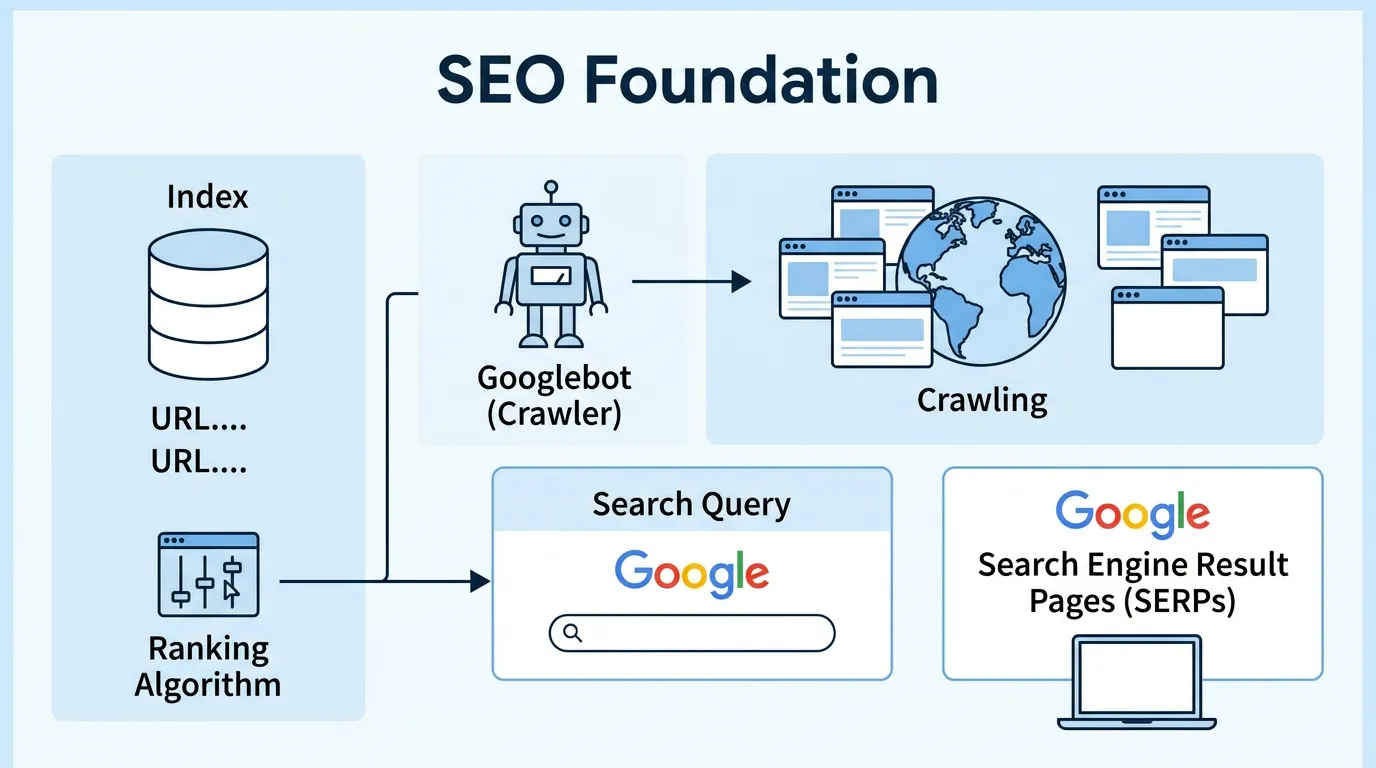
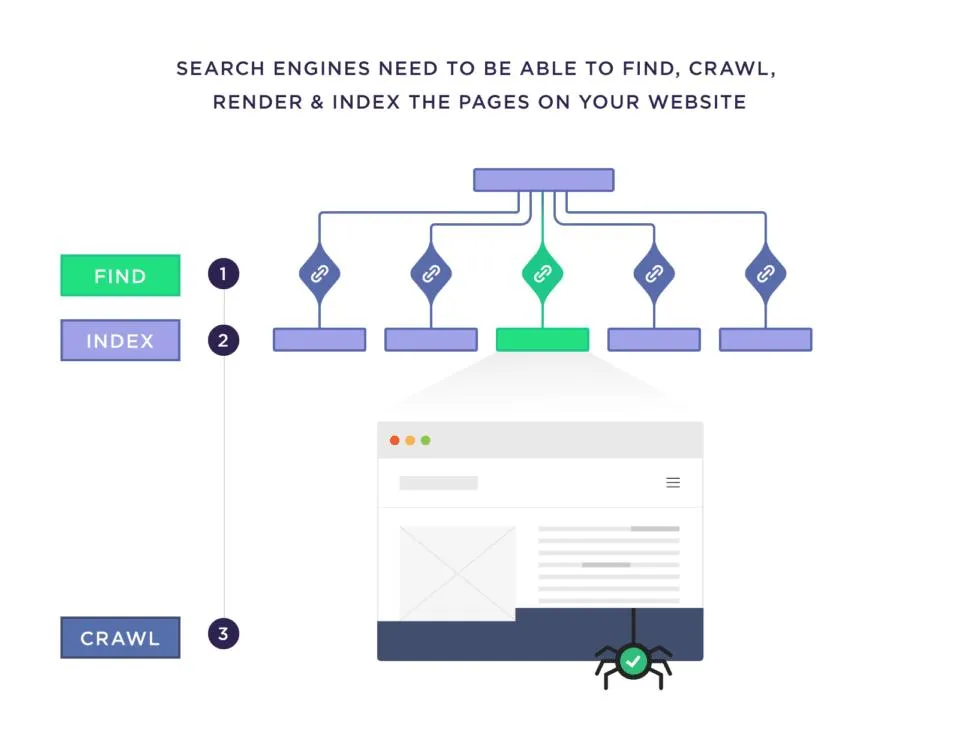
Google Indexing adds web pages to the search index, making them eligible to appear in search results. Discovery happens through links, sitemaps, and URL submissions. Once discovered, content is analyzed and quality assessed before being included in the index. Crawling is discovery, indexing is storage, and ranking is retrieval. Common indexing challenges include discovery issues, crawlability problems, and quality concerns. Without proper indexing, even the best-optimized content remains invisible to searchers.
Chapter 2
The Evolution of Indexing
Indexing has evolved from simple discovery to AI-powered prioritization. Traditional crawling offered minimal control over what got indexed. Mobile-first indexing became standard in 2018, requiring mobile content accessibility. AI now powers quality assessment and intelligent crawling decisions. Real-time discovery emerged with IndexNow, enabling near-instant indexing. Understanding this evolution helps anticipate future developments.
Evolution of indexing eras
Era
Key Feature
Control Level
1990s-2000s
Basic crawling
Minimal
2005
XML Sitemaps
Moderate
2018
Mobile-first indexing
High
2020s
AI-powered indexing
Sophisticated
2024-2025
IndexNow real-time
Maximum
Chapter 3
Crawl Budget Fundamentals
Crawl budget is the number of URLs search engines will crawl on your site within a given timeframe. Large websites with thousands of pages face crawl budget constraints. Crawl demand reflects how much search engines want to crawl your site, driven by content quality, freshness, and authority. Crawl capacity depends on your server's ability to handle requests. Site size, content freshness, authority signals, server response time, and duplicate content all affect crawl budget allocation.
⚠ Important
Crawl budget is critical for large sites. If your site has thousands of pages, you must manage crawl budget efficiently to ensure important pages are discovered.
Chapter 4
Crawl Budget Optimization
Maximizing crawl efficiency requires removing low-value URLs that waste resources. Implement URL parameter handling to prevent crawling of variations. Block thin content and duplicate pages. Improve internal linking to ensure important pages are discovered. Fix redirect chains that consume crawl resources unnecessarily. Use canonical tags to consolidate duplicate content. Optimize page speed and server response time. Monitor crawl patterns in Search Console to identify issues. Remove unnecessary parameter variations that create endless URL combinations.
Remove low-value URLs Thin content, duplicates
Parameter handling Prevent endless variations
Improve internal linking Ensure discovery
Fix redirect chains Save crawl resources
Canonical tags Consolidate duplicates
Monitor Search Console Identify issues
Chapter 5
Sitemap Optimization
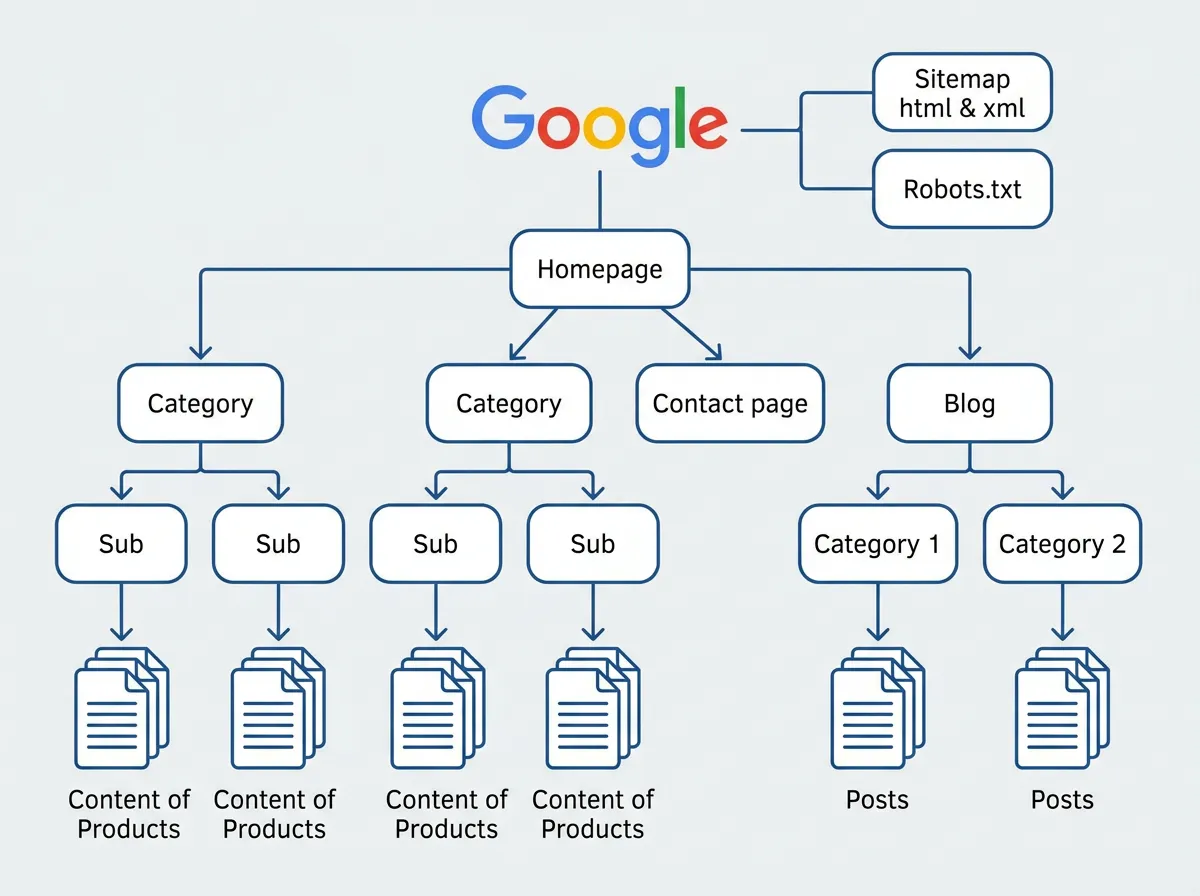
XML Sitemaps help search engines discover your content by providing explicit URL signals. Include only canonical URLs, excluding duplicate versions and parameter variations. Ensure all important pages are included and update regularly with content changes. Use proper XML formatting and include last modification dates to indicate freshness. HTML Sitemaps benefit both users and search engines through improved navigation. Dynamic sitemaps automatically update when content changes.
Sitemap types and best uses
Sitemap Type
Best For
Update Frequency
XML Sitemap
All websites
Regular
HTML Sitemap
User navigation
Regular
Dynamic Sitemap
Large websites
Real-time
Image Sitemap
Image-rich sites
Regular
Video Sitemap
Video content
Regular
Chapter 6
Advanced Sitemap Strategies
Sitemap segmentation involves creating multiple sitemaps organized by content type, section, or priority. Create separate sitemaps for articles, products, and pages. Organize by website section and submit through a sitemap index. Dynamic sitemaps auto-update with content changes, reducing manual maintenance. Large websites require sophisticated management to handle thousands of pages. Common mistakes include including non-canonical URLs, excluding important pages, and using outdated sitemaps with incorrect information.
⚠ Common Mistake
Including non-canonical URLs in your sitemap wastes crawl budget and confuses search engines. Always include only canonical versions.
Chapter 7
Robots.txt Fundamentals
Robots.txt controls what search engine bots can crawl on your website. It prevents crawling of low-value content and helps manage crawl budgets. The file uses User-agent to identify which bot the rule applies to. Disallow prevents crawling of specified URLs. Allow permits crawling of specific URLs. Sitemap points to your XML sitemap location. Common misconfigurations include accidentally blocking important pages, which prevents them from being indexed entirely.
Block parameter URLs like session IDs and sorting options to save crawl resources. Use pattern matching for efficient rule management. Ensure critical content is accessible without JavaScript since bots may not execute it fully. Test robots.txt changes using Search Console's tester before implementing live. Verify important pages aren't accidentally blocked. Keep the file simple and well-organized. Review and update regularly as your site changes. Include sitemap location in the file.
Chapter 9
IndexNow Explained
IndexNow is an API protocol enabling near-instant indexing of content changes. Supported by Bing, Yandex, Seznam, and Google. Generate a unique API key and verify through a text file in your root directory. Submit URLs via POST request when content is added, updated, or removed. Search engines receive submissions immediately and prioritize crawling. Benefits include near-instant indexing, reduced crawl overhead, improved freshness, and competitive advantage for time-sensitive content.
IndexNow Workflow
Generate API key
Verify with a text file
Submit URLs via API
Monitor success
Address errors
⚡ Key Benefit
IndexNow enables near-instant indexing, often within minutes, compared to traditional days or weeks.
Chapter 10
IndexNow Implementation Strategy
Most CMS platforms support IndexNow through plugins or extensions. Custom integration is possible via API implementation. Submit URLs automatically when content is published, updated, or removed. Handle API responses and errors properly. Enterprise websites require scalable implementation to handle large content volumes. Monitor submission success in search engine tools. Verify search engines receive submissions and address any errors promptly. Automate submission for consistent indexing.
Chapter 11
Advanced Technical Indexing Strategies
Canonical tags indicate preferred page versions, preventing duplicate content issues. Implement on all pages using self-referencing tags. Internal linking helps search engines discover content and understand importance. Create logical site structure with clear hierarchies. Use descriptive anchor text. Pagination requires real next and prev tags for multipage content. Structured data improves search engine understanding. Manage URL parameters properly. Ensure JavaScript content is accessible without JavaScript execution.
Chapter 12
Measuring Indexing Performance
Google Search Console provides essential indexing reports. Coverage Report shows indexing status for all discovered URLs. Indexing Report reveals how many pages are indexed. URL Inspection verifies individual page status. Crawl statistics show crawl frequency and errors. Log file analysis from server logs reveals detailed crawl data and patterns. Monitor these metrics regularly to identify and address issues before they impact visibility.
Key indexing KPIs
KPI
What It Measures
Healthy Range
Total Indexed Pages
Pages in index
90%+ of important pages
Coverage Error Rate
Percentage of errors
Less than 5%
Crawl Efficiency
Crawled vs indexed
80%+
Indexing Speed
Publication to indexing
Under 24 hours
Chapter 13
Common Indexing Problems
Orphan pages lack internal links, making discovery difficult. Add internal links and use sitemaps to help discovery. Duplicate content wastes crawl resources and confuses search engines. Use canonical tags and 301 redirects to consolidate. Soft 404 errors occur when pages return 200 status but display "page not found" content, preventing indexing. Return proper 404 status codes for missing pages. Noindex tags block indexing when applied incorrectly. Remove unnecessary tags. Redirect problems include broken chains and loops requiring simplification. Thin content may be crawled but not indexed due to insufficient value. Improve quality and depth.
Chapter 14
Common Mistakes to Avoid
Crawl Budget Mistakes
Blocking important pages in robots.txt
Allowing low-value pages to consume resources
Ignoring duplicate content issues
Failing to manage URL parameters effectively
Sitemap Mistakes
Including non-canonical URLs
Excluding important pages
Using outdated sitemaps
Improper XML formatting
Forgetting to update sitemaps after content changes
Robots.txt Mistakes
Blocking important pages accidentally
Allowing unimportant pages
Incorrect Disallow rules
Syntax errors
Forgetting to update after site changes
IndexNow Mistakes
Not implementing IndexNow for fresh content
Ignoring submission errors
Not verifying search engines receive submissions
Using IndexNow without proper key verification
Technical Mistakes
Ignoring canonical tags
Not managing URL parameters
Using noindex incorrectly
Ignoring JavaScript SEO requirements
Failing to monitor indexing health regularly
⚠ Critical Error
Blocking important pages in robots.txt is one of the most costly mistakes. Always test changes and verify important pages remain accessible.
Chapter 15
90-Day Google Indexing Improvement Plan
Month 1 – Audit
Audit current indexing status using Search Console
Review Coverage Report for errors
Identify pages not indexed
Check sitemap status and robots.txt
Analyze internal linking structure
Identify orphan pages
Document findings and prioritize issues
Month 2 – Optimize
Implement crawl budget optimization
Remove low-value URLs
Block parameter variations
Optimize sitemap configuration
Implement segmentation if needed
Implement IndexNow
Submit important pages
Fix coverage errors
Add canonical tags properly
Month 3 – Advance
Implement advanced technical strategies
Improve internal linking
Address JavaScript SEO issues
Optimize robots.txt configuration
Establish monitoring and reporting
Create dashboards
Review progress and document improvements
Measurable Goals
Reduce coverage errors by 80%
Decrease indexing time to under 24 hours
Improve indexed page count by 20%
Reduce crawl waste by 50%
Achieve 90%+ indexing of important pages
Chapter 16
Conclusion
Google Indexing is the foundation of all search visibility. If pages aren't indexed, they cannot rank, regardless of optimization efforts. Master crawl budget optimization by removing low-value URLs and improving internal linking. Optimize sitemaps by including only canonical URLs and updating regularly. Configure robots.txt properly without accidentally blocking important pages. Implement IndexNow for near-instant discovery of fresh content. Monitor Search Console reports and address issues promptly.
The businesses that implement these strategies will enjoy faster indexing, better visibility, and sustainable search performance. Those who ignore indexing fundamentals risk becoming invisible in search results. Start implementing these techniques today. The time to act is now.
Master indexing fundamentals to ensure your content is discovered and visible.FAQ
Frequently Asked Questions
What is Google Indexing?
The process of adding web pages to Google's search index. Indexed pages become eligible to appear in search results.
Why aren't my pages being indexed?
Common reasons include quality issues, crawl budget constraints, robots.txt blocking, noindex tags, duplicate content, or technical errors.
What is crawl budget?
The number of URLs search engines will crawl on your site within a given timeframe. It affects how many pages get discovered.
An API protocol enabling near-instant indexing by notifying search engines immediately when content changes.
How do I implement IndexNow?
Generate an API key, create a verification file in your root directory, and submit URLs via the API when content changes.
What should I include in my sitemap?
Include only canonical URLs. Exclude duplicates, parameter variations, and non-canonical versions. Update regularly.
How often should I update my sitemap?
Update whenever content is added, changed, or removed. Dynamic sitemaps update automatically with content changes.
What robots.txt mistakes should I avoid?
Avoid blocking important pages, using incorrect Disallow rules, and forgetting to update robots.txt after site changes.
How do I check indexing status?
Use Google Search Console's Coverage Report and URL Inspection tool to check errors, warnings, and individual page status.
What are soft 404 errors?
Pages that return a 200 status but display "page not found" content. They prevent proper indexing.
How long does indexing take?
Traditional indexing can take days to weeks. IndexNow enables near-instant indexing, often within minutes.
Checklist
Quick Reference Checklist
☐
Submit XML sitemap to Google Search Console
☐
Include only canonical URLs in sitemap
☐
Update sitemap with content changes
☐
Review robots.txt for blocked pages
☐
Implement IndexNow for fresh content
☐
Fix redirect chains
☐
Add canonical tags to all pages
☐
Improve internal linking structure
☐
Remove low-value URLs
☐
Monitor Search Console Coverage Report
☐
Fix coverage errors promptly
☐
Optimize page loading speed
☐
Manage URL parameters
☐
Audit for orphan pages
☐
Review indexing health monthly
"Effective Google Indexing is not just about getting pages into search results. It's about ensuring the right pages are discovered, crawled, and indexed efficiently."
About the Publisher
Advanced SEO Series is a dedicated publisher of technical SEO guides and blueprints. With a focus on practical, actionable strategies, the series empowers digital professionals to master complex search topics and achieve sustainable visibility. From indexing fundamentals to AI-driven optimization, each guide is designed for real-world implementation.
This guide is part of the Technical SEO Mastery Series.